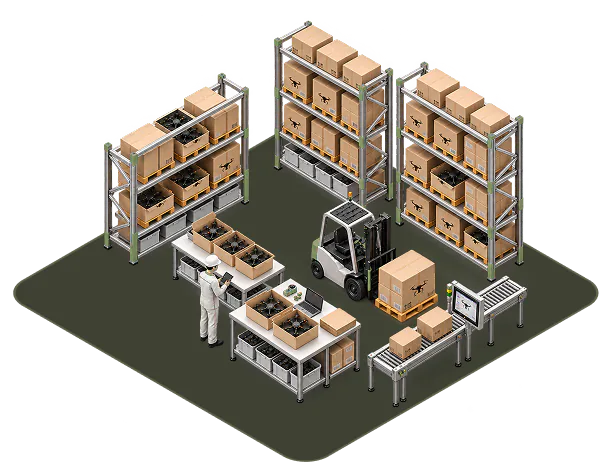
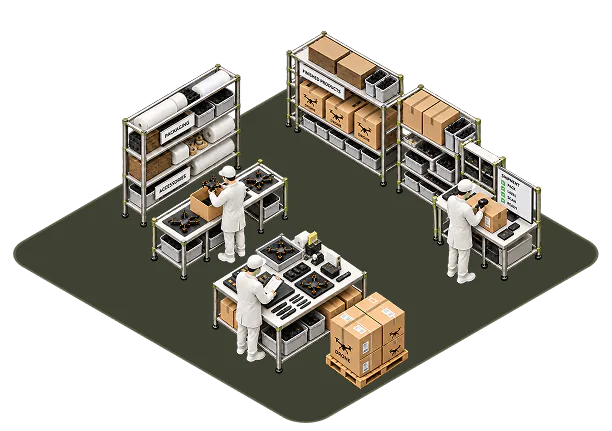
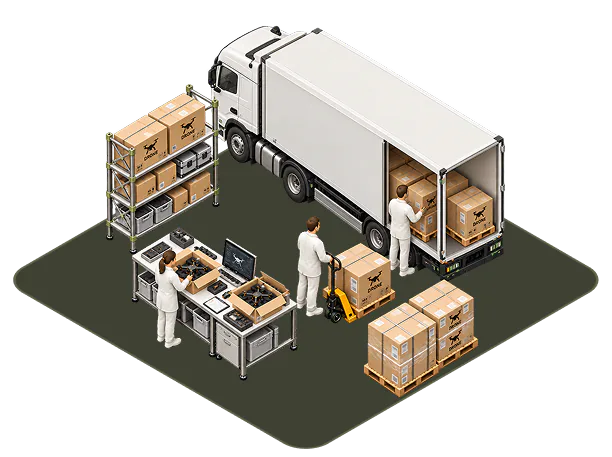
Orders are still handled manually

Orders come in by email, phone, Excel, or several disconnected channels.
Plan the build, buy the long-lead parts, and run serialized assembly and flight test — in one production operations platform built for drone manufacturers.
Control over unit cost, revisions and approved alternates.
The bill of materials stops being a file and becomes the source that drives purchasing, warehouse, assembly and test calculations.
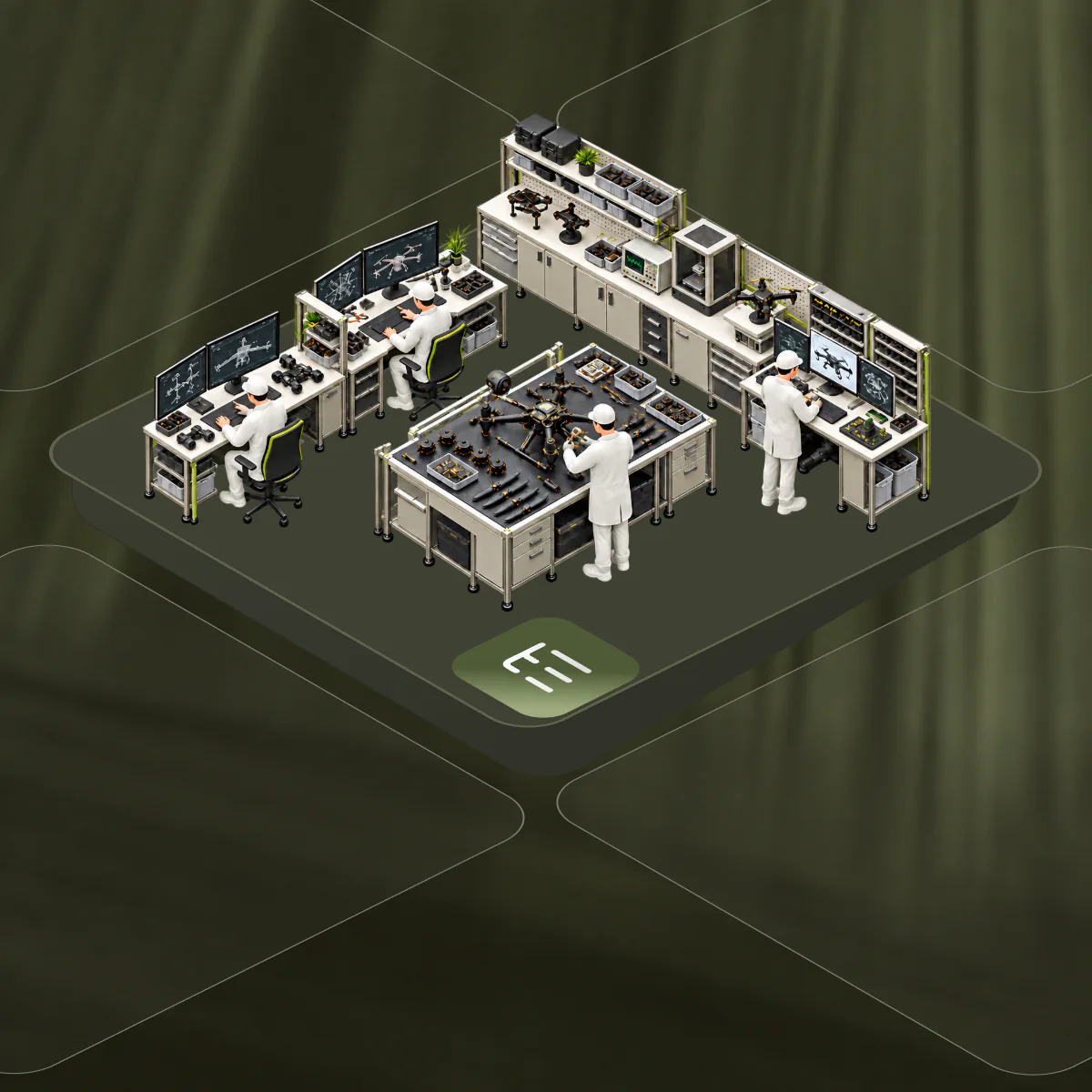
The problem
Orders come in by email, phone, Excel, or several disconnected channels.
Leads to
Quantity errors and no clear source of truth
Build plans are created by hand, without forecast, automatic aggregation of orders, bills of materials, work cells, and test schedules.

Leads to
Overproduction, shortages, and constant firefighting
Companies see revenue, but not the real margin per contract, program, airframe variant, or site.
Leads to
This leads to
Margin loss across contracts
Component demand, supplier orders, incoming inspection, and delivery claims are often managed manually or in separate files.
Leads to
Component shortages, overstocks, and uncontrolled costs
Bills of materials, scrap, yields, revisions, and component prices are not continuously translated into the real cost per airframe.
Leads to
No control over the cost of variants, airframes, and contracts
our solution
No more spreadsheets, inboxes, and manual coordination. INVO connects contracts, bills of materials, assembly, components, deliveries, and reporting into one operational model.
Connect data
Connect orders, forecasts, bills of materials, inventory, purchasing and assembly. INVO creates a single data layer so the entire operation can work with the same up-to-date information.

Predict
INVO forecasts demand, build volumes and component requirements from historical data, contract schedules, open orders and supplier lead times.
Plan & orchestrate
The system translates forecasts and orders into purchasing, warehouse releases, build orders, work-cell capacity and flight-test slots — while accounting for component availability and production constraints.
Execute & optimize
Compare the plan with actual builds, component consumption, scrap and costs. INVO detects deviations, shows their impact on performance and uses operational data to improve future decisions.
What you build
INVO connects contracts, bills of materials, assembly, purchasing, and test data in one system — built around how drone production actually runs.
Build Variants
Standard
58%
Night ops
18%
Ext. range
12%
Build Orders
Today
12,450
BOMs
Orders
Variants
Track demand per program, lot, variant, and airframe. The system flags open ECOs, revisions, and missing data before assembly.
Create, version, and release bills of materials per program. Manage approvals, comments, export-control flags, and airworthiness rules.
Monitor customer claims, non-conformances, delivery lot acceptance, and schedule compliance against contract terms.
Modular by design.Connected by Factory Brain.
Modules, roles, workflows, and operational rules configured around your contracts, facilities, and processes.
Add new features, integrations, and processes without rebuilding the entire system from scratch.
One system that grows with the number of sites, lines, contracts, variants, and business lines.

In-house product engineers
80 +
Operational analytics
Every contract, build order, bill of materials, assembly run, test result, and cost generates data. INVO captures it in one place, structures it, and turns it into reports, alerts, and dashboards you can use to make real-time decisions.
Data is created automatically in everyday operations — from orders and build counts to assembly, purchasing, deliveries, and claims.
The system standardizes data from different modules and connects it into one model: contracts, sites, variants, bills of materials, components, costs, and SLA.
INVO surfaces variances, costs, risks, delays, component shortages, contract profitability, and build quality.
Dashboards, alerts, and reports help you react faster — before an issue affects production, delivery, the client, or margin.
Operational dashboards
See which contracts are profitable
Compare performance across facilities
Predict demand and supply needs
Detect cost leaks
Optimize production and logistics
implementation impact
5–15%
reduction in labor costs
3–10%
reduction in component costs
30–70%
fewer operational errors
2–8%
purchasing savings
50–80%
shorter reporting time
+2–6pp
contract margin improvement
Every order, revision, bill of materials, delivery, and cost is captured once — then feeds planning, assembly, logistics, controlling, and reporting.